
The Rule on Proportionality in Illegal Dismissal: When Dismissal Is Too Harsh
Philippine courts consistently apply a rule of proportionality in illegal dismissal cases: even if a just cause exists under the Labor Code, dismissal may still be declared illegal if the penalty is unduly harsh compared to the gravity of the infraction and the attendant circumstances. This post discusses key Supreme Court decisions where grounds for discipline were present, but the Court nonetheless refused to uphold dismissal because it was disproportionate.
Atty. Jason Oliver Sun
1/3/20268 min read
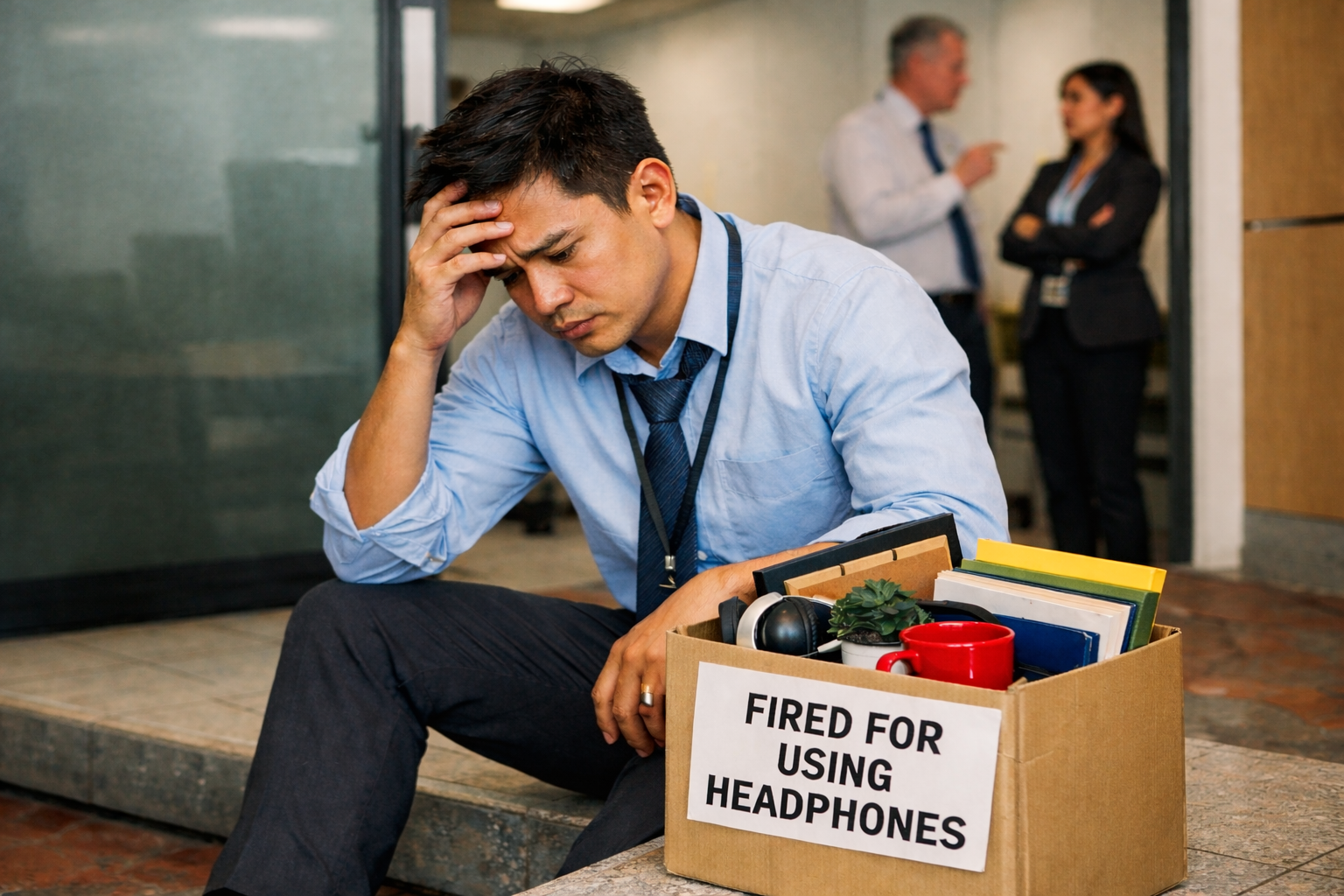
Philippine labor law recognizes the employer’s prerogative to discipline and even terminate employees, but this prerogative is never absolute. The Supreme Court has repeatedly stressed that the punishment must fit the offense, taking into account not just the act itself, but also the employee’s intent, length of service, and overall record. This post examines how the rule on proportionality operates in illegal dismissal cases, through illustrative decisions where the Court acknowledged a valid ground for discipline but still struck down the penalty of dismissal as too harsh.
Legal Basis: Just Causes and the Need for a Fitting Penalty
Article 297 (formerly 282) of the Labor Code enumerates the just causes that allow an employer to terminate employment:
“An employer may terminate an employment for any of the following just causes:
(a) Serious misconduct or willful disobedience by the employee of the lawful orders of his employer or representative in connection with his work;
(b) Gross and habitual neglect by the employee of his duties;
(c) Fraud or willful breach by the employee of the trust reposed in him by his employer or duly authorized representative;
(d) Commission of a crime or offense by the employee against the person of his employer or any immediate member of his family or his duly authorized representative; and
(e) Other causes analogous to the foregoing.”
Over time, the Supreme Court has read into this framework a proportionality requirement: even if a “just cause” exists, dismissal must still be commensurate to the offense. The Court considers dismissal as the "ultimate penalty" which should only be imposed for the gravest infractions. Where a lesser sanction would suffice, dismissal can amount to illegal dismissal.
The major premise is thus clear: existence of a just cause is not the end of the analysis; the court still examines whether dismissal is a proportionate response to the specific infraction and circumstances.
Case 1: Insubordination and Minor Acts – Transglobal Maritime v. Chua, Jr.
In Transglobal Maritime Agency, Inc. v. Chua, Jr., a seafarer was dismissed on the ground of insubordination for refusing to sign a written reprimand and a logbook entry. The employer relied on “willful disobedience” as a just cause.
The Court first reiterated the elements of insubordination: “For insubordination or willful disobedience to justify dismissal, the order violated must be reasonable, lawful, sufficiently known to the employee, and must pertain to the duties which the employee has been engaged to discharge.”
Even assuming a degree of disobedience, the Court focused on proportionality. The acts complained of did not relate to the seafarer’s core shipboard duties, and were not shown to be perverse or malicious. The Court held: “Dismissal is too harsh a penalty for a seafarer’s refusal to sign a written reprimand or logbook entry when such acts do not pertain to his core duties and are not shown to be willful or perverse; proportionality between the infraction and the penalty must be observed.”
Application: Even where some ground for discipline (disobedience) arguably exists, the Court refused to equate it with a dismissible offense because the nature of the act and its relation to work did not justify the ultimate penalty. The just cause was too weak to sustain dismissal, though it could warrant a lesser sanction.
Case 2: Property-Related Infractions – Holcim Philippines v. Obra and Cited Cases
In Holcim Philippines, Inc. v. Obra, the Court tackled proportionality head-on. It explained that in cases involving company property or funds, the proper penalty is not determined solely by the existence of a rule or breach, but also by the gravity and context of the infraction.
The penalty of dismissal must be commensurate to the gravity of the employee’s infraction, taking into account the value of the item involved, the employee’s length of service, and the presence or absence of wrongful intent. When the infraction is not so gross or serious, and the employer acted in good faith, reinstatement without backwages may be proper instead of outright dismissal or separation pay.
Holcim is particularly instructive because it illustrates proportionality using earlier cases:
Sagales v. Rustan’s Commercial Corp. (as summarized in Holcim):
“The dismissal of a Chief Cook who tried to take home a pack of squid heads, which were considered as scrap goods and usually thrown away, was found to be excessive… the Chief Cook had been employed by the company for 31 years already and the incident was his first offense. Besides, the value of the squid heads was a negligible sum of P50.00 and the company practically lost nothing since the squid heads were considered scrap goods and usually thrown away… the ignominy he suffered when he was imprisoned over the incident, and his preventive suspension for one (1) month was enough punishment for his infraction.”
Rule applied: Even assuming a technical breach of company rules (attempted misappropriation), dismissal was disproportionate considering:Negligible value of the property;
31 years of service;
First offense; and
Prior preventive suspension and humiliation already suffered.
Farrol v. Court of Appeals (also summarized in Holcim):
"A district manager incurred a shortage of ₱50,985.37, used to pay retirement benefits of five employees. He eventually reduced the shortage to ₱6,995.37 yet was dismissed under a rule that prescribed dismissal for such shortage. The Court held that the 'dismissal imposed on [him] is unduly harsh and grossly disproportionate to the infraction which led to the termination of his services. A lighter penalty would have been more just, if not humane,' considering that it was his first infraction and he had rendered 24 years of service to the bank."
Rule applied: Even when loss or shortage is admitted (a potential just cause), the Court weighs:Purpose of the act (to benefit retiring employees);
Restitution or substantial recovery of the amount;
Long, otherwise unblemished service;
Employer’s own rules against standards of fairness and humanity.
Across these cases, the Court accepted that some form of misconduct existed, but still found dismissal illegal because the penalty far exceeded the actual harm and culpability.
Case 3: Attendance and Health – Verizon Communications v. Margin
In Verizon Communications Philippines, Inc. v. Margin, the employer terminated an employee over absences it treated as unauthorized. The employee, however, was absent due to illness and had properly notified the employer.
More specifically, the Supreme Court found that, "The [Court of Appeals] was thus correct to conclude that the information given by [the employee] is sufficient to properly apprise [the employer] of his condition. The [Court of Appeals] likewise fittingly held that [the employee]'s failure to submit proof of illness while he was on sick leave and to indicate a return date did not render his absence unauthorized." Hence,the penalty of dismissal for such absence is disproportionate and unduly harsh. However, when the employer acts in good faith and the employee is not entirely faultless, the award of backwages may be withheld even if the dismissal is declared illegal.
Application: Even if the employee’s attendance record raised legitimate employer concerns (a disciplinary interest exists), health-related absences with notice do not automatically amount to a just cause for dismissal. Termination was too extreme; lesser measures (e.g., warnings, closer supervision, or other sanctions) would have sufficed.
Case 4: Long Service and Minor Infractions – Intercontinental Broadcasting v. Guerrero
In Intercontinental Broadcasting Corporation v. Guerrero, the Court underscored that years of faithful service and clean record mitigate the appropriate penalty, even when a rule violation exists: “Dismissal is the ultimate penalty and should only be imposed for the gravest infractions, with lesser penalties considered for less severe violations, especially when the employee has long years of service and no prior record of misbehavior.”
Application: The Court’s logic is syllogistic:
Major premise: Dismissal is reserved for the gravest infractions.
Minor premise: The employee’s act, while sanctionable, was not grave in light of long service and absence of prior violations.
Conclusion: Dismissal is disproportionate; a lesser penalty is the proper response.
This reasoning recurs in many decisions: long service + first offense + minor harm will almost always tilt the Court away from upholding dismissal.
Case 5: Reinstatement Without Backwages – Integrated Microelectronics, Inc. v. Pionilla
In Integrated Microelectronics, Inc. v. Pionilla, the employee violated company policy (lending his company ID to a relative applying for work), which the employer viewed as a security risk. The Court still found dismissal too harsh considering the employee’s nine years of unblemished service, and treated the misconduct as warranting discipline—but not termination—then applied the equitable exception to grant reinstatement without backwages rather than the full usual consequences of illegal dismissal.
The Court explained that in Pionilla it excused the employer from backwages because dismissal was too harsh and the employer acted in good faith, “honestly perceived” the violation as a threat to security.
Relevant Factors
From these cases, the following factors appear to be relevant to the application of the proportionality rule:
Nature of the ground (just/authorized cause):
Is it inherently serious (e.g., serious misconduct, gross negligence, fraud, crime) or relatively minor?
Value and impact:
Monetary value of any loss or damage;
Actual or potential harm to the employer’s operations, property, or reputation.
Employee’s circumstances:
Length of service;
Overall performance and prior record (first offense vs. repeated violations);
Position of trust or responsibility.
Mental state and motive:
Was the act willful, malicious, or fraudulent?
Were there humane or benign motives (e.g., helping co-workers, acting under confusion or illness)?
Existing sanctions and prior consequences:
Has the employee already been preventively suspended, humiliated, or otherwise penalized?
Availability of lesser penalties:
Would warning, reprimand, suspension, demotion, or other measures suffice to correct behavior and protect the employer’s interest?
Because the Court applies this framework, it is entirely possible for a just cause in the abstract to exist, but for dismissal still to be struck down as illegal due to disproportionality. In cases where the employee is not entirely blameless and the employer acted in good faith, the Court may also apply the rule on proportionality to reach a “middle outcome" by awarding reinstatement without backwages, which is intended to serve as an equitable balance between management prerogative and labor protection.
Practical Takeaways for Employers and Counsel
Do not stop at “just cause”: Always ask, “Is dismissal the least severe penalty that adequately protects the company?” If not, you run a real risk of an illegal dismissal finding based on proportionality.
Document mitigating (and aggravating) factors: When infractions occur, record not just the violation but also:
Employee’s years of service and prior record;
Value of any loss and whether it was recovered;
Evidence of intent (or lack of it).
Calibrate penalties: Minor, first-time infractions, especially involving low-value items or health-related issues, should rarely lead straight to dismissal.
Review company codes of conduct: Rigid “automatic dismissal” clauses for all forms of shortage, minor property issues, or technical infractions are vulnerable to being struck down as harsh or inhumane.
Conclusion
Because dismissal is the “ultimate penalty,” Philippine jurisprudence insists on a principle of proportionality in illegal dismissal cases. The Supreme Court has repeatedly held that even where an employee’s act falls within a statutory just cause, dismissal may still be illegal if, in light of the circumstances, it is unduly harsh or grossly disproportionate.
Cases like Transglobal Maritime, Holcim (and its discussion of Sagales and Farrol), Intercontinental Broadcasting, Verizon Communications, and Integrated Microelectronics illustrate a consistent theme: the law protects not only the employer’s right to discipline, but also the employee’s right to humane and proportionate treatment. For practitioners and employers, the lesson is clear: always align the penalty with the true gravity of the offense, or risk having a dismissal struck down as illegal.
Disclaimer: This article was prepared with the assistance of artificial intelligence and may contain errors. It is intended solely for educational and informational purposes. It does not constitute legal advice, nor does it create an attorney-client relationship. Readers should note that the applicable laws and jurisprudence may vary depending on the specific facts of each case.
For advice regarding your particular circumstances, please consult our qualified legal professionals at Sun Law Office.
Contact
info@sunlawoffice.com
© 2026. All rights reserved.
Sun Law Office